
Urban Systems as the Frontline of Stability
Cities as Compression Points
Urban environments concentrate demographic growth, economic activity, and social diversity within limited space. This concentration amplifies both opportunity and risk.
Failures in urban systems produce immediate effects. Service disruption, congestion, and housing shortages are experienced directly. They generate visible dissatisfaction.
Visibility accelerates response. Grievances that might remain diffuse in rural contexts become focal points in cities. This increases the likelihood of collective action.
Service Delivery as Political Signal
Urban services are not neutral. They signal state capacity and fairness. Reliable delivery reinforces legitimacy. Uneven or inconsistent delivery undermines it.
Citizens evaluate institutions through daily interactions—transport systems, water access, electricity reliability. These interactions shape perception more than abstract policy.
Failures accumulate. Each disruption reinforces the perception of institutional weakness. Over time, this perception becomes generalized.
Spatial Inequality and Proximity Effects
Urban inequality is spatially concentrated. Disparities are visible. Proximity intensifies their impact.
Residents compare conditions across neighborhoods. Visible differences in infrastructure, services, and opportunity create persistent tension.
This tension is not abstract. It is reinforced daily. It shapes expectations and behavior.
Addressing spatial inequality is therefore a stability function. It reduces persistent grievance and limits mobilization potential.
Governance Complexity
Urban governance requires coordination across multiple agencies—transport, utilities, housing, security. Fragmentation reduces effectiveness.
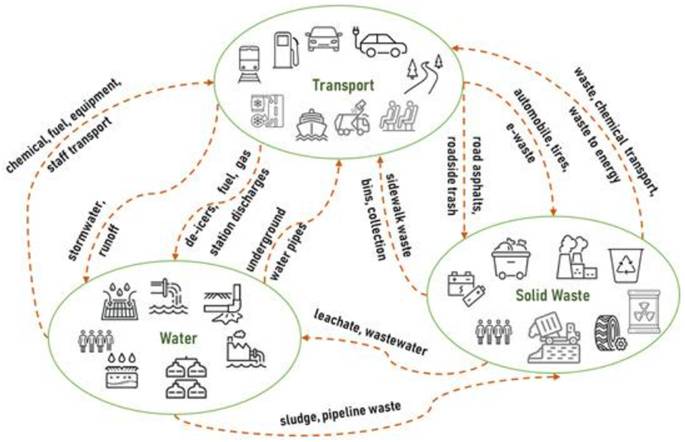
Coordination failures produce cascading effects. A breakdown in one system affects others. For example, transport disruption affects economic activity and service access.
Effective governance requires integrated planning and execution. Institutional silos undermine this integration.
Urbanization and Informal Systems
Rapid urbanization weakens traditional informal authority structures. Migration disrupts established networks. New populations lack access to existing mediation mechanisms.
This creates gaps in dispute resolution. Conflicts escalate more quickly because local mechanisms are absent or ineffective.
Adapting informal systems to urban contexts is therefore critical. Without adaptation, urban systems become more volatile.
Operational Implications
Policy must treat urban systems as central to stability architecture. Service delivery, spatial planning, and governance coordination are not secondary concerns.
Analytical frameworks should track service reliability, spatial inequality, and governance capacity. These indicators provide early signals of urban instability.
The constraint is operational: urban systems must absorb pressure rather than amplify it. Failure to do so has national consequences.